

What Is Offshore Bookkeeping?
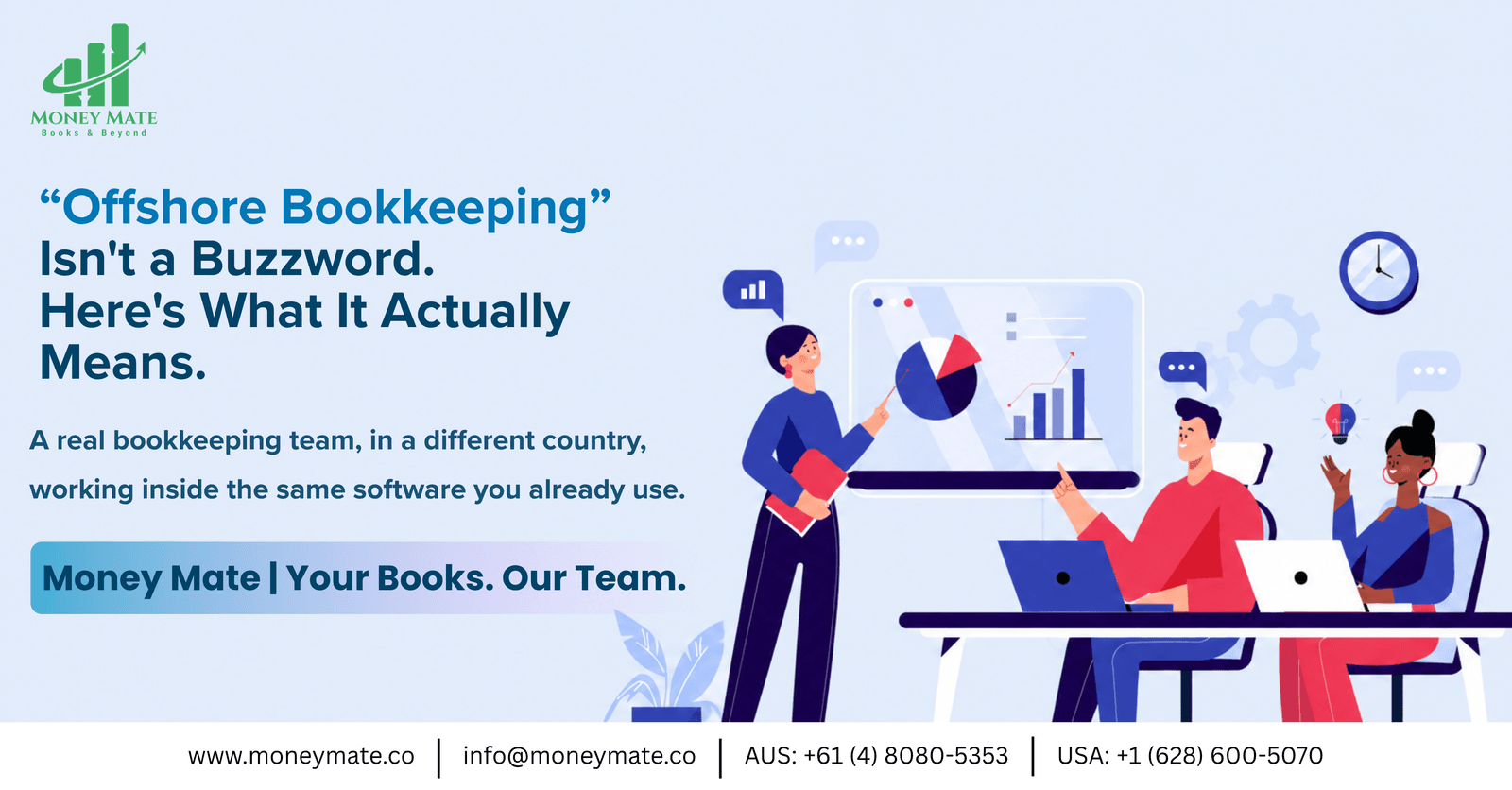
Offshore bookkeeping is the practice of hiring a bookkeeping team based in a different country to manage your financial recordkeeping, rather than hiring an in-house employee or a local bookkeeping firm. The offshore team works remotely, usually inside the same cloud accounting software you already use, and handles the same core tasks a local or in-house bookkeeper would.
India has become the leading destination for this work, thanks to a large pool of trained accounting professionals, strong cloud-software fluency, and time zones that work well alongside both Australia and the US.
How Does Offshore Bookkeeping Actually Work?
- You keep your existing software. Whether you use Xero, QuickBooks, MYOB, Sage or NetSuite, the offshore team logs into your account with secure, permissioned access — nothing is migrated or duplicated.
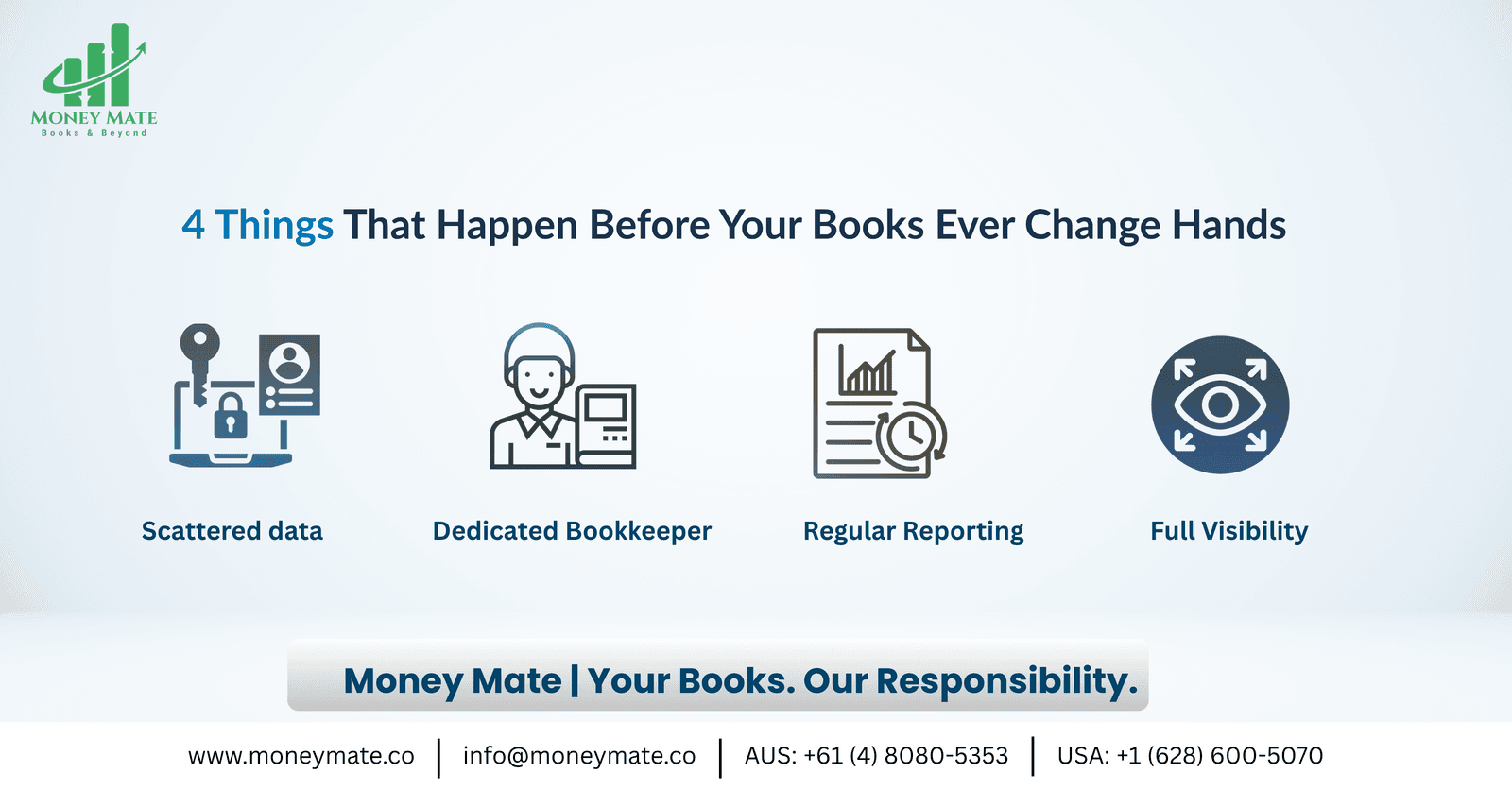
- You're assigned a dedicated bookkeeper. A properly-run offshore provider gives you one point of contact who learns your business, backed by a wider team for continuity.
- Work happens on a regular cadence. Daily transaction categorisation, weekly reconciliations, and monthly reporting and close — the same rhythm you'd expect from an in-house bookkeeper.
- You stay in the loop. Because everything runs in the cloud, you can check your books at any time — it's not a black box you only hear from at month-end.
What Tasks Can Be Handled Offshore?
- Day-to-day bookkeeping and general ledger maintenance
- Bank and credit card reconciliations
- Accounts payable (vendor bills and payments) and accounts receivable (invoicing and collections)
- Payroll bookkeeping, including STP Phase 2 recording for Australian employers and 1099/W-2 tracking for US businesses
- BAS/GST or sales tax recordkeeping (your accountant, CPA or BAS agent still handles the actual filing)
- Financial reporting — P&L, balance sheet, cash flow, and month-end close support
What Does Offshore Bookkeeping Cost?
Pricing usually depends on transaction volume, the number of accounts to reconcile, and which extra services (payroll, tax recordkeeping) you need. As a general guide, offshore bookkeeping typically costs a fraction of an in-house hire once you factor in salary, superannuation or payroll tax, benefits, software, and recruitment — commonly a saving of up to 60%. Get a tailored quote for your specific business rather than relying on averages, since pricing varies with complexity.
Is Offshore Bookkeeping Safe and Legal?
Yes — it's a widely used, legitimate model, provided the provider takes security seriously. Look for encrypted cloud platforms, role-based access controls, multi-factor authentication, and signed confidentiality agreements, ideally aligned to a recognised standard like ISO 27001.
Offshore vs. Outsourced vs. In-House — Where Does It Fit?
"Offshore bookkeeping" is really a type of outsourced bookkeeping — outsourcing describes using an external provider at all, while offshore specifies that the provider is based overseas rather than in your own country.
Signs Your Business Is Ready for Offshore Bookkeeping
- You've outgrown DIY bookkeeping or spreadsheets and it's starting to cost you accuracy or time.
- You're paying local bookkeeping rates that feel disproportionate to your transaction volume.
- You need more consistent coverage than a part-time local bookkeeper can offer.
- You're not ready (or don't need) to take on a full-time in-house hire, with all the overhead that comes with it.
How to Get Started
Getting started typically involves a short consultation to review your current bookkeeping setup, a proposal tailored to your transaction volume and needs, and an onboarding period (often one to two weeks) to connect securely to your software and get your dedicated bookkeeper up to speed. Whether you're based in offshore accounting services for Australian businesses or offshore accounting services for US businesses, the process looks broadly the same — the main differences come down to which compliance requirements (BAS/GST vs. sales tax/1099) your bookkeeper needs to be trained on.
Frequently Asked Questions
Is offshore bookkeeping the same as outsourced bookkeeping?
Not quite — offshore bookkeeping is a type of outsourced bookkeeping. "Outsourced" just means an external provider does the work; "offshore" specifies that provider is based in another country.
Will an offshore bookkeeper understand my country's compliance requirements?
A properly-trained offshore team will be specifically trained in your country's frameworks — BAS, GST and STP for Australia, or GAAP, sales tax and 1099/W-2 recordkeeping for the US — rather than applying generic practices.
Do I lose control over my books with offshore bookkeeping?
No. Since everything runs in your existing cloud accounting software, you retain full visibility and can check your books at any time.
How long does it take to get set up?
Most providers, including Money Mate, can have you fully onboarded within one to two weeks.
Is offshore bookkeeping only for large businesses?
No — it's commonly used by small businesses and startups specifically because it removes the cost of a full in-house hire while still providing dedicated, professional support.
How Money Mate Helps
Now that you know what offshore bookkeeping involves, meet the Money Mate team to see how we deliver it — or go straight to booking a free consultation if you're ready to talk about your specific business.